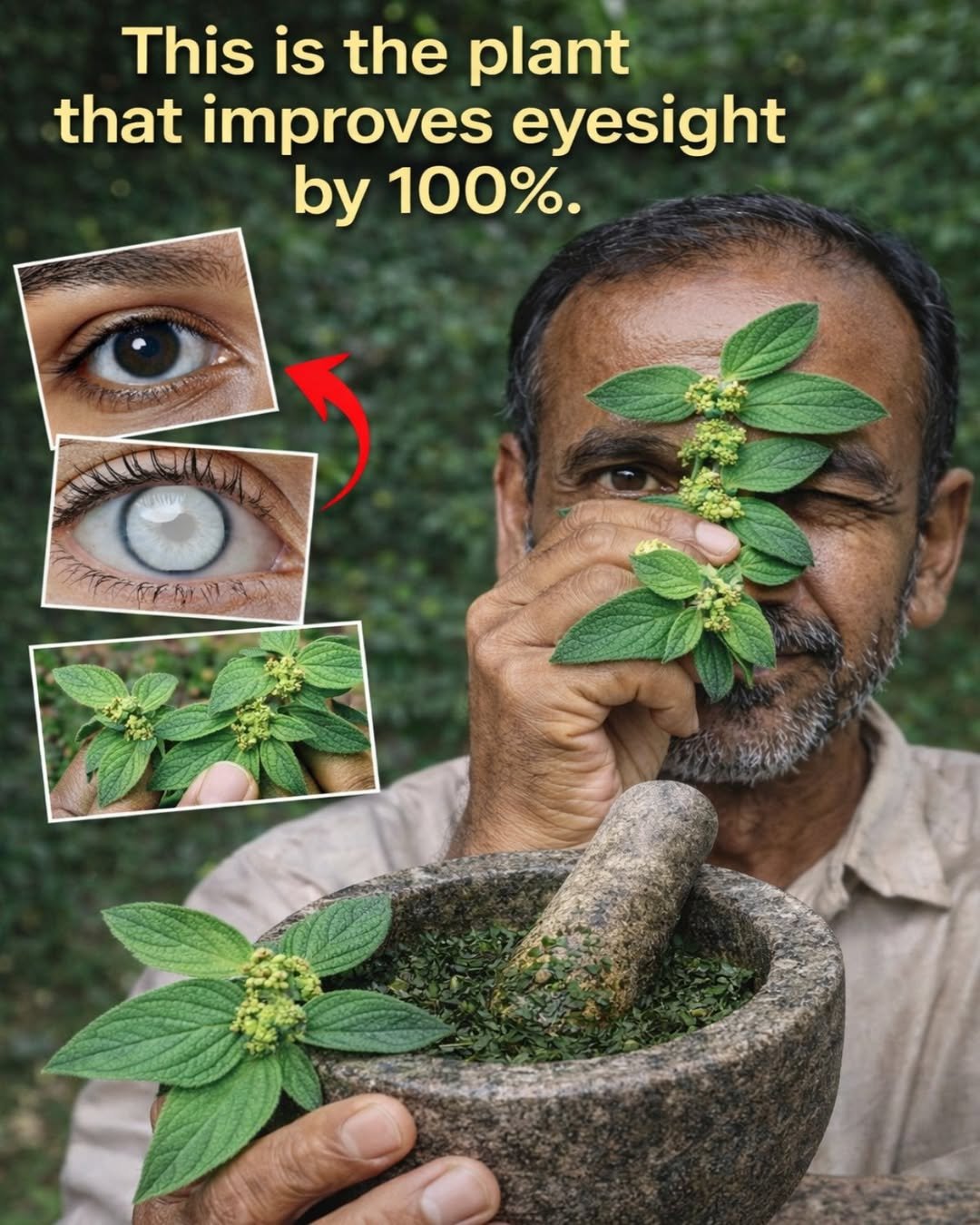
You’ve probably seen posts claiming:
👉 “This plant improves eyesight by 100%!”
It sounds powerful—but let’s break it down honestly so you don’t get misled 👇
⚠️ First, What Is This Plant?
The plant shown is often referred to as “big-leaf milkweed” (commonly linked to plants like Calotropis in traditional medicine).
👉 Important:
Many milkweed-type plants contain strong, sometimes toxic compounds.
❌ The Big Claim: “Improves Eyesight 100%”
Let’s be very clear:
- ❌ No plant can restore vision by 100%
- ❌ No herb can cure serious eye conditions like cataracts or glaucoma
- ❌ There is no scientific proof supporting this claim
👉 This is viral misinformation, designed to attract attention.
⚠️ Serious Warning (Very Important)
🚫 Do NOT put plant juice, extracts, or homemade remedies into your eyes.
Why?
- Can cause burning, irritation, or damage
- Risk of infection or vision loss
- Some milkweed species are toxic to the eyes
👉 This can be dangerous.
✅ What Actually Helps Your Eyes
Instead of risky tricks, focus on what truly works:
🥕 Nutrition
- Vitamin A (carrots, sweet potatoes)
- Lutein & zeaxanthin (spinach, leafy greens)
🧴 Protection
- Wear sunglasses in strong sunlight
- Reduce screen strain (20-20-20 rule)
🩺 Checkups
- Regular eye exams
- Early detection = better outcomes
💬 The Honest Bottom Line
- 🌿 Some plants have traditional uses
- ❌ But not all are safe or effective
- ⚠️ Your eyes are too important for risky experiments
🧠 Final Thought
If something promises “miracle healing”, it’s usually too good to be true.
Protect your vision with safe, proven habits—not viral shortcuts.